
Calling all business owners and brand enthusiasts! If you’ve ever found yourself staring at your logo or website, wondering… “Is it time for a rebrand?” — trust me… you’re not alone.
Rebranding is one of those buzzwords tossed around the marketing world that sounds exciting, but can also feel daunting.
Should you dive in headfirst or hit the brakes?
Today, we’re breaking down when a business truly needs a rebrand — and when you’re better off sticking with what you’ve already got.
But, before we dive in, let’s clarify what rebranding means.
What Exactly Is a Rebrand?
A rebrand is more than just slapping on a new logo or updating your color scheme. It’s a comprehensive process of reshaping your company’s identity — this could include your visual elements, messaging, target audience, and even company values.
Rebrands often aim to:
– Modernize an outdated image
– Reflect a change in business focus
– Distance you from negative associations
– Reach a new audience
– Stay competitive in your market
But make no mistake, a rebrand is a big step. Done wrong, it can confuse loyal customers or drain resources with little payoff.
Signs Your Business Might Need a Rebrand
1) Your Brand Feels Outdated
If your look and messaging are stuck in the past, it might be time for a refresh. Trends change, and what once felt modern can age quickly.
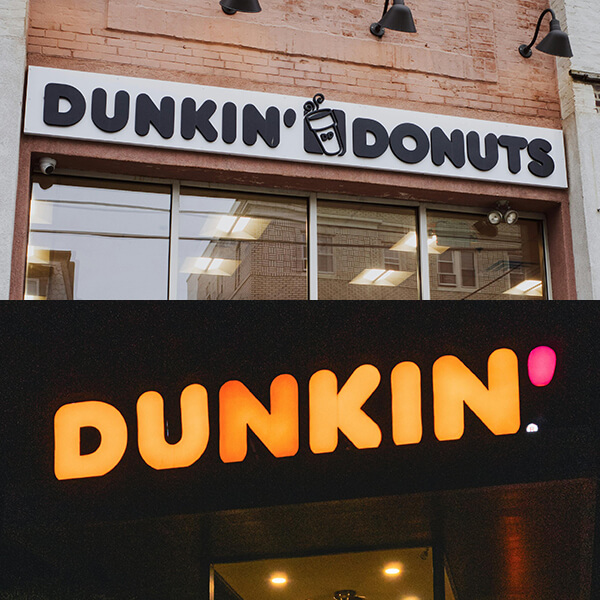
Think about companies like Dunkin’ dropping “Donuts” to become more contemporary and broaden their appeal.
Being outdated doesn’t mean you have to jump on every trend, but if your brand feels stale or irrelevant, a rebrand could breathe new life into your business.
2) Your Business Has Pivoted or Expanded
Maybe you started as a local coffee shop and evolved into a lifestyle brand selling merch and coffee subscriptions nationwide. Or perhaps you initially offered only B2B services and now serve consumers directly.
If your branding no longer reflects what you do or who you serve, customers will get confused.
A rebrand helps realign your identity with your current offerings and market position.

3) You’re Experiencing Negative Associations
Sometimes brands become linked to controversies, customer dissatisfaction, or simply negative perceptions. If your reputation is taking a hit, rebranding can help reset public opinion.
However, this should go hand-in-hand with addressing the underlying issues (poor service, product quality, etc.). A fresh look alone won’t fix these problems but can complement a sincere turnaround effort.
4) You Want to Stand Out From Competitors
The market is crowded, and if your brand blends into the background, customers might overlook you.
A creative rebrand can differentiate your business, highlight your unique value proposition, and capture attention.
Just make sure your new identity still resonates with your core audience; standing out for the sake of being different isn’t always beneficial.

5) You’re Targeting a New Audience
Are you aiming for millennials now instead of baby boomers? Expanding internationally?
Sometimes rebranding is essential to speak the language, tone, and style of new demographics.
6) Your Brand Architecture Has Changed
Mergers, acquisitions, or launching new product lines can create confusion without clear brand consolidation.
Updating your branding can unify different parts of your business under one cohesive identity.

When Rebranding Probably Isn’t Necessary
Before you rush into a rebrand, consider some situations where it may be better to focus on other strategies:
1) You Just Don’t Like Your Logo
It’s common to grow tired of visuals, but if the brand still connects well with customers and accurately reflects your business, a simple logo refresh or tweaking your design might suffice.
Remember: your brand is much more than just the logo. Personality, customer experience, and product quality matter more than aesthetics alone.
2) Sales Are Down, But You Haven’t Dug Deeper
A dip in revenue or engagement might tempt you to rebrand, but often the root cause lies elsewhere — like pricing, customer service, or marketing execution.
Do thorough research to diagnose problems before taking the drastic step of a rebrand.

3) Your Brand Identity Is Strong and Well-Established
If your customers love you for who you are, messing with your brand identity could backfire.
Stability has value, especially for established companies with loyal followers.
Small updates to keep things fresh are fine, but avoid major shifts just for the sake of change.
4) You Lack the Budget and Resources
Rebranding is costly and time-consuming.
Without sufficient budget, manpower, or a clear strategy, the process can cause more harm than good.
Focus first on optimizing operations, improving products, or fine-tuning marketing tactics before committing to a full-scale rebrand.

How to Decide if Your Business Needs a Rebrand
If you’re on the fence, here’s a simple decision-making checklist:
– Does your current brand clearly communicate who you are and what you offer?
– Is your audience changing or expanding?
– Have there been major business changes (products, markets, leadership)?
– Are you struggling to differentiate yourself?
– Is your brand associated with negative perceptions?
– Do you have the time, budget, and expertise to do it right?
If you answered “yes” to most of these… a rebrand could be a smart move.
Tips for a Successful Rebrand
If you decide to take the leap, keep these best practices in mind:
– Start with research: Understand your audience, competitors, and market trends.
– Define clear goals: Know what you want to achieve with the rebrand.
– Involve stakeholders: Get feedback from employees, customers, and partners.
– Keep your core values: Don’t lose what makes you unique.
– Communicate transparently: Tell your story clearly to ease the transition.
– Plan the rollout: Update all touchpoints consistently — website, packaging, social media, signage.
– Monitor and adapt: Track how customers respond and be ready to tweak.
THE bottom line
Rebranding isn’t a magic wand — it’s a strategic tool.
Done thoughtfully, it can revitalize your business, open doors to new markets, and build stronger connections. But a hasty or unnecessary rebrand can confuse customers and squander resources.
Take the time to evaluate why you’re considering a rebrand and what you hope to accomplish. Sometimes polishing your existing brand is the best path forward. Other times, stepping boldly into a new identity is just what your business needs.
So, next time you wonder, “Should I rebrand?”… ask yourself: Is it about changing or truly growing?
That answer will guide you toward the best choice for your business — and your customers.
Thinking about a rebrand for your business?
Let RDV Media help you with that.

written by
RDV is a multidisciplinary artist and owner/CEO of RDV Media, with over a decade of experience in the creative industry.