
Today we’re coming to you with a blog that’s lengthier than usual, but on a topic that’s important nevertheless — and that topic is ✨ Product Advertising ✨
Product advertising is a crucial facet of business success. The ways in which companies communicate their value propositions to consumers have evolved dramatically over time, presenting a plethora of types or mediums to choose from.
Understanding these different advertising channels and how to utilize them effectively can mean the difference between thriving and merely surviving in competitive markets.
Each medium serves a different role in how people discover, understand, and act on a brand’s message. The most effective campaigns choose mediums based on the product, audience, budget, and the stage of the buying journey, then combine them so each channel supports the others.
Not sure where to begin and which to choose? You’re in luck!
Keep reading; we’re diving deep into various mediums of product advertisements, explaining their unique characteristics, advantages, and strategies for businesses and brands to maximize their impact.
For the TLDR summary, check out the table at the bottom for a quick breakdown.
Now, without further ado, let’s start with the “Why?”

Why medium choice matters
An advertising medium is the channel used to deliver a marketing message, and the medium strongly affects how the audience receives it.
Some channels are best for broad awareness, others for precise targeting, and others for building trust, explaining details, or prompting a direct response.
Brands that understand these differences can create campaigns that are more efficient and more persuasive… and thus, more profitable.
The different mediums of product advertising
1 ) Print Advertising
Print advertising includes newspapers, magazines, brochures, catalogs, flyers, and posters. It works well when a brand wants a physical format that people can read, revisit, and keep nearby. Print often feels more deliberate and credible, which makes it useful for products that benefit from explanation, strong visuals, or a premium presentation.
Print advertising can work to support local promotions, seasonal offers, product launches, and brand storytelling.
• How Businesses Can Use Print Advertising
— Targeted Reach: Magazines and newspapers often cater to niche audiences, making it easier for businesses to reach specific customer segments.
— Brand Credibility: Print ads are often perceived as more trustworthy since they appear in established publications.
— Tactile Experience: Physical ads, especially brochures and flyers, provide customers with something tangible to hold onto, increasing recall.
— Local Marketing: Flyers and local newspapers are effective for community-level promotions, driving foot traffic to retail stores or events.
• Best Practices
— Invest in high-quality visuals and compelling copy.
— Choose publications that align closely with your target market.
— Incorporate QR codes or call-to-actions directing readers to online platforms for engagement.

2 ) Television Advertising
Television advertising remains one of the strongest mediums for building large-scale awareness quickly. It combines sight, sound, motion, and storytelling, which makes it especially effective for emotional branding and products that need visual demonstration. TV can create strong recall when the message is simple, memorable, and repeated often.
It works especially well for consumer products that benefit from showing how they look, sound, feel, or perform. The best TV ads keep the message focused, show the product early, and end with one clear next step.
• How Businesses Can Use Television Advertising
— Mass Awareness: Ideal for building widespread brand recognition quickly.
— Emotional Connection: Through creative narratives, TV commercials can forge strong emotional bonds with viewers.
— Product Demonstration: TV enables showcasing product features clearly, helping consumers understand benefits.
— Event Sponsorship: Brands can associate with popular shows or events to boost visibility.
• Best Practices
— Create memorable, concise messages that resonate emotionally.
— Utilize prime-time slots or programs favored by your target demographic.
— Support TV campaigns with digital follow-ups for extended engagement.
3 ) Radio Advertising
Radio advertising is a useful medium for reaching local or regional audiences with frequent repetition. Because it relies on voice and sound rather than visuals, it can feel personal and conversational. Radio is especially effective during commuting hours, workday listening, and other moments when people are already tuned in.
A strong radio ad uses clear audio, a distinctive voice or sound, and a direct call to action.
• How Businesses Can Use Radio Advertising
— Local Targeting: Radio stations often serve specific geographical areas, ideal for local businesses.
— Frequency: Repetition through radio can reinforce brand messages effectively.
— Cost-Effective: Radio ads generally cost less than TV, allowing for frequent airplay.
— Call-to-Action: Direct listeners to websites, stores, or special offers.
• Best Practices
— Craft catchy jingles or slogans for recall.
— Align ad timing with peak listening hours.
— Partner with popular radio personalities to lend credibility.
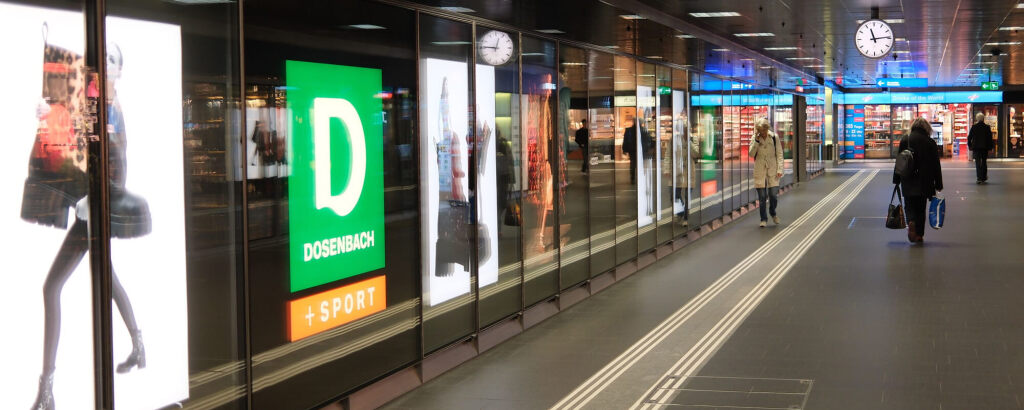
4 ) Outdoor and Transit Advertising
Outdoor and transit advertising includes billboards, bus ads, train wraps, station posters, taxi placements, and similar public displays. This medium is powerful because it reaches people repeatedly as they move through daily routines.
Since viewers usually see these ads for only a few seconds, the creative should be simple, bold, and easy to understand at a glance. Strong outdoor advertising uses minimal copy, striking visuals, and one memorable message.
• How Businesses Can Use Outdoor Advertising
— High Visibility: Effective for reinforcing brand presence repeatedly in high-traffic areas.
— Geographic Targeting: Placing ads near stores or in relevant neighborhoods drives local awareness.
— Creative Impact: Bold visuals and simple messaging capture attention even for brief glances.
— Mobile Ads: Transit wraps turn vehicles into moving billboards reaching diverse audiences.
• Best Practices
— Prioritize clarity and brevity — viewers only have seconds to grasp the message.
— Use bright, contrasting colors to stand out.
— Integrate with digital campaigns using hashtags or URLs.
5 ) Digital and Social Media Advertising
Digital and social media advertising covers display ads, search ads, video ads, mobile ads, social posts, promoted content, and paid campaigns across online platforms. This is one of the most flexible mediums because it allows precise targeting, real-time testing, and measurable performance. It is also ideal for moving users from awareness to action quickly.
Businesses can use digital and social media advertising at every stage of the funnel, from introducing a product to retargeting interested buyers. Search ads are especially useful for capturing existing demand, while social media is strong for discovery, engagement, and audience building. Success depends on tailoring the creative to the platform, segmenting the audience carefully, and sending traffic to a focused landing page.
• Key Platforms
— Search Engine Marketing (SEM): Ads appear on search results, capturing users with intent.
— Social Media Ads: Platforms like Facebook, Instagram, TikTok, LinkedIn offer highly tailored ad placement.
— Display Ads: Banner ads on relevant websites generate awareness.
— Video Ads: Short promos on YouTube or streaming services engage visually.
• How Businesses Can Use Digital Advertising
— Targeting and Personalization: Use data analytics to reach specific demographics, interests, and behaviors.
— Cost Efficiency: Pay-per-click (PPC) and programmatic buying optimize budgets by paying for actual engagement.
— Interactive Content: Incorporate polls, quizzes, or shoppable posts encouraging immediate action.
— Measurable Results: Track conversion rates, impressions, and ROI in real-time.
• Best Practices
— Continuously test and optimize ads based on performance data.
— Tailor content to platform norms (e.g., eye-catching short videos for TikTok).
— Use retargeting to re-engage visitors who didn’t convert initially.

6 ) Email Marketing
Email marketing is one of the most direct and cost-effective ways to communicate with an audience that has already shown interest in a brand. It works well for nurturing relationships, announcing offers, recovering abandoned carts, and encouraging repeat purchases. Unlike many other mediums, email gives brands full control over timing, messaging, and audience segmentation.
Companies can use email marketing for product updates, promotions, loyalty programs, educational content, and personalized recommendations. It is especially effective when messages are relevant, well-timed, and clearly organized.
• How Businesses Can Use Email Advertising
— Customer Retention: Regular newsletters help nurture ongoing relationships.
— Promotions and Discounts: Announce offers to drive immediate sales.
— Segmented Campaigns: Tailor messages based on purchase history and preferences.
— Cross-selling and Upselling: Recommend complementary products.
• Best Practices
— Craft compelling subject lines to increase open rates.
— Optimize emails for mobile devices.
— Include clear CTAs and easy links to purchase.
7 ) Influencer Marketing
Influencer marketing uses creators, experts, and public personalities to promote products through trusted online or social content. This medium works well because audiences often view influencers as more relatable and authentic than traditional ads. It can be especially powerful for beauty, fashion, food, lifestyle, fitness, travel, and consumer tech products.
Brands can use influencer marketing to build awareness, demonstrate product use, and add credibility through social proof. Clear messaging, authentic content, and proper disclosure are essential for strong results.
• How Businesses Can Use Influencer Advertising
— Niche Access: Influencers connect with dedicated communities, ideal for specialized products.
— Trust Building: Recommendations from trusted figures carry more weight than traditional ads.
— Content Creation: Influencers produce creative content that resonates with followers.
— Social Proof: User engagement validates brand credibility.
• Best Practices
— Choose influencers whose values align with your brand.
— Clearly define campaign goals and deliverables.
— Encourage authentic storytelling rather than scripted endorsements.

8 ) Event and Experiential Marketing
Event and experiential marketing creates direct, memorable interactions between a brand and its audience. This can include product demos, pop-up shops, sponsorship activations, trade shows, tasting events, and immersive brand experiences. The main advantage is that people can see, touch, try, or experience the product in a way that feels personal and memorable.
To succeed, the experience should be engaging, on-brand, and easy to share both in person and online.
• How Businesses Can Use Experiential Advertising
— Memorable Engagement: Hands-on experiences foster strong emotional connections.
— Word-of-Mouth: Unique events encourage sharing on social media.
— Sampling Opportunities: Allow consumers to try before they buy, building confidence.
— Brand Differentiation: Stand out in saturated markets.
• Best Practices
— Tailor events to reflect brand personality and customer interests.
— Leverage social media to extend event reach.
— Collect customer feedback and contact info for future marketing.
9 ) Cinema Advertising
Cinema advertising appears before movie screenings and sometimes within theater lobbies or concession areas. It offers a highly attentive audience because viewers are already seated and less distracted than they might be in many other environments. This makes it a strong medium for visually appealing ads and cinematic storytelling.
Brands can use cinema advertising to support launches, premium products, entertainment campaigns, and brands that want an immersive presentation. Since audiences are engaged, the message can be more atmospheric and emotionally driven than in shorter, cluttered formats.
• How Businesses Can Use Cinema Advertising
— High Attention: Few distractions mean higher ad recall.
— Premium Positioning: Association with entertainment enhances brand prestige.
— Local Targeting: Ads can be shown in theaters within key markets.
• Best Practices
— Use high-quality sound and visuals.
— Keep messages concise and impactful.
— Consider pairing cinema ads with promotional offers redeemable online or in-store.

10 ) Direct Mail Advertising
Direct mail advertising sends physical marketing pieces such as postcards, letters, brochures, or catalogs directly to consumers or businesses. It is highly targeted and can feel personal because it arrives in someone’s mailbox rather than appearing in a crowded feed or broadcast stream. Direct mail is especially useful for local offers, reactivation campaigns, and products that benefit from more detailed presentation.
Businesses can use direct mail advertising to promote new stores, special discounts, membership offers, and seasonal campaigns. It works particularly well when paired with digital marketing, since repeated exposure across channels can improve response. The most effective direct mail pieces are visually clean, easy to understand, and built around one clear offer.
• How Businesses Can Use Direct Mail Advertising
— Personalized Messaging: Tailored offers based on customer data improve relevance.
— Tangibility: Physical mail stands out amid digital clutter.
— Integrated Campaigns: Combine with digital ads to reinforce messaging.
• Best Practices
— Use high-quality paper and printing.
— Include incentives such as coupons or exclusive discounts.
— Ensure mailing lists are up-to-date and segmented.
How to choose the Ad medium that’s best for your product
The best medium depends on what the brand needs most: reach, targeting, trust, explanation, repetition, or direct response.
• Most useful for awareness:
— Television
— Cinema
— Outdoor
• Most useful for targeting and conversion:
— Digital
— Direct mail
• Most useful for trust and engagement:
— Influencer
— Experiential marketing
• Most useful for local credibility:
— Radio
In practice, the strongest campaigns use several mediums together.
A brand might introduce a product through TV or influencer marketing, reinforce it with social media and outdoor ads, then convert interest through email and direct mail. When the message stays consistent but the format adapts to each channel, the campaign is far more effective.

TLDR summary
| Medium | Key Strengths | Ideal Uses | Quick Tips for Success |
|---|---|---|---|
| Print Advertising | Tangible, credible, visually detailed. | Catalogs, brochures, magazine ads, local promotions. | Keep the layout clean and include a simple call to action. |
| Television Advertising | Large reach, strong storytelling, high impact. | Brand launches, broad awareness, visual products. | Show the product early and keep the message simple. |
| Radio Advertising | Repetition, local reach, conversational tone. | Local businesses, commuter audiences, reminders. | Use clear audio and repeat the brand name often. |
| Outdoor and Transit Advertising | High visibility, geographic targeting, repeated exposure. | Billboards, transit routes, local awareness campaigns. | Use bold visuals and very little text. |
| Digital and Social Media Advertising | Targeting, measurement, flexibility. | Search, social, video, retargeting, mobile campaigns. | Tailor creative to each platform and test variations. |
| Email Marketing | Direct, low-cost, personalized communication. | Promotions, loyalty, cart recovery, product updates. | Use a strong subject line and one clear action. |
| Influencer Marketing | Trust, authenticity, social proof. | Product discovery, demonstrations, audience building. | Choose creators whose audience fits the brand naturally. |
| Event and Experiential Marketing | Hands-on engagement, memorability, word of mouth. | Launches, demos, pop-ups, sponsorship activations. | Make the experience interactive and easy to share. |
| Cinema Advertising | Attentive audience, premium presentation, strong visual impact. | Launches, entertainment, premium products. | Design for the big screen and focus on emotion. |
| Direct Mail Advertising | Targeted, personal, physical presence. | Local offers, reactivation, seasonal promotions. | Make the offer obvious and connect it to a digital action. |
THE bottom line
No one-size-fits-all solution exists in advertising. Product advertising works best when the medium fits the job it needs to do.
Each medium has distinct strengths and limitations, and the best approach depends on your product, target audience, budget, and marketing objectives.
Savvy businesses often combine multiple channels to create integrated campaigns that multiply effectiveness.
By thoughtfully selecting and optimizing each medium, brands can create cohesive narratives that resonate with consumers, driving awareness, preference, and ultimately, sales.
Ready to advertise your product using one (or more!) of the mediums listed?
Let RDV Media help you with that.

written by
RDV is a multidisciplinary artist and owner/CEO of RDV Media, with over a decade of experience in the creative industry.