
Outside of the digital design and content creation world, terms like “3D modeling” and “3D rendering” are often used interchangeably, yet they actually represent two distinct stages in the process of creating stunning 3D visuals.
Whether you’re a business looking to showcase 3D products or simply curious about 3D animation, understanding the difference between these two processes is crucial.
Today, we’re breaking down the concepts of 3D modeling and 3D rendering, highlighting their unique roles, and shedding light on how they work together to bring digital ideas to life.
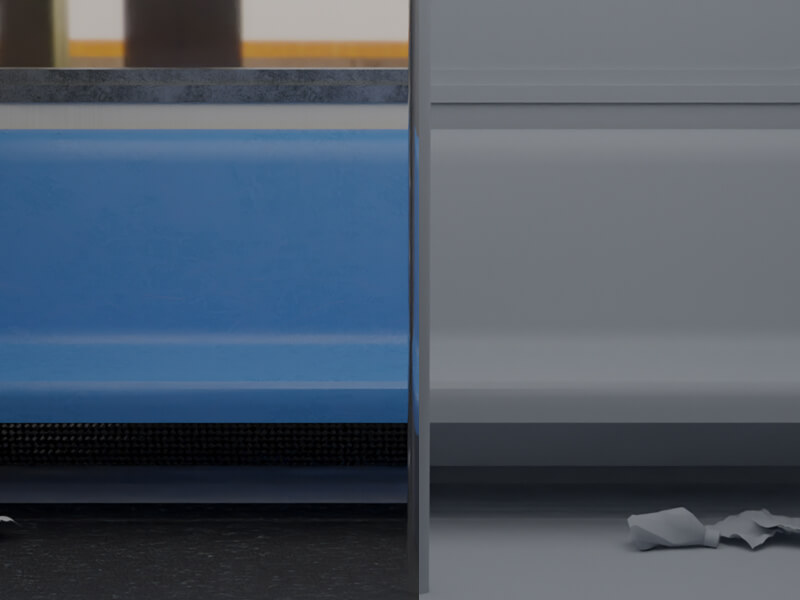
What Is 3D Modeling?
At its core, 3D modeling is the process of creating a three-dimensional representation of any object or surface using specialized software. Imagine sculpting a clay figure, but instead of physical materials, you use digital tools to build shapes, curves, and textures. This digital sculpture forms the foundation upon which all further enhancements depend.
3D modeling involves building a mesh, typically composed of vertices, edges, and faces, that form the shape of the object. Artists and designers can create anything from simple geometric shapes to highly intricate designs that replicate real-world items with impressive accuracy.
For example, when designing 3D products for an online store, the model needs to be precise to ensure the virtual product looks and feels authentic.
The importance of 3D modeling cannot be overstated: it sets the stage for all subsequent steps like animation or rendering. Without a solid, well-crafted model, the final output may appear unrealistic or flawed.
Additionally, 3D modeling allows creators to manipulate objects by resizing, reshaping, or combining different elements, offering unmatched flexibility in design — something that is especially important when using these 3D models to sell real-world products.
What is 3D Rendering?
While 3D modeling is about crafting the shape and structure, 3D rendering is the process of generating a final, polished image or animation from that model.
Think of rendering as the act of painting and lighting a sculpture to make it look lifelike or stylistically unique. It involves converting the digital 3D model into a 2D image or a sequence of images for animations, integrating details like lighting, shadows, reflections, colors, and textures.
Rendering can be as simple as creating a basic image or as complex as producing high-quality photorealistic visuals used in movies, advertisements, or virtual reality experiences.
For instance, in 3D animation, rendering plays a critical role in breathing life into characters and environments, providing depth and realism that captivate audiences.
There are various rendering techniques such as ray tracing, scanline rendering, and global illumination, each with its particular set of advantages and computational requirements.
The choice of rendering method affects the quality, speed, and style of the final output, making it an essential consideration in any 3D project.
Why Are Both 3D Modeling and 3D Rendering Essential?
Understanding why both 3D modeling and 3D rendering are indispensable requires recognizing their complementary nature. Without a detailed 3D model, rendering loses its basis — there’s nothing to light or texture.
Similarly, even the most detailed and realistic 3D model remains a lifeless blueprint until rendering adds color, lighting, and realism.
For businesses showcasing 3D products online, this synergy means customers can see items in vivid detail, from every angle, under different lighting conditions. This immersive experience enhances customer confidence, increases engagement, and ultimately drives sales.
In creative industries like gaming and film, the seamless collaboration between modeling and rendering teams ensures that characters move naturally within believable worlds.
The precision of modeling combined with the artistry of rendering creates captivating 3D animations that tell stories beyond what traditional media can achieve.
Common Tools and Software Used
Lastly, several powerful tools have emerged to streamline the workflows of 3D modeling and 3D rendering.
Software like Blender, Autodesk Maya, and 3ds Max are popular choices for creating complex models thanks to their versatile modeling toolsets.
On the rendering side, engines such as V-Ray, Arnold, and Cycles provide advanced lighting and shading capabilities to produce high-quality images and animations.
Some platforms offer integrated solutions where modeling and rendering happen in the same environment, accelerating development time and improving consistency.
Choosing the right software often depends on project requirements, budget, and the desired level of realism or stylization.
THE bottom line
3D modeling and 3D rendering are distinct but interdependent processes that form the backbone of modern digital visualization.
3D modeling lays down the structure and form of digital objects, while 3D rendering transforms these models into visually compelling images or animations.
Whether creating 3D products for e-commerce, developing an immersive 3D animation, or crafting virtual experiences, mastering both aspects is essential for delivering captivating and realistic results.
By appreciating their differences and how they work in harmony, designers and businesses alike can better leverage these technologies to enhance creativity, improve communication, and connect more effectively with their audiences.
As technology continues to advance, the possibilities in 3D modeling and 3D rendering are virtually limitless — offering exciting opportunities for innovation and expression in the digital world.
Have a product you need to bring to life through 3D modeling and 3D rendering?
Let RDV Media help you with that!
Contact us to learn how we can help you elevate your visual storytelling and bring your products to life through stunning 3D visuals and animations. Book our expert 3D modeling and 3D rendering services today!

written by
RDV is a multidisciplinary artist and owner/CEO of RDV Media, with over a decade of experience in the creative industry.